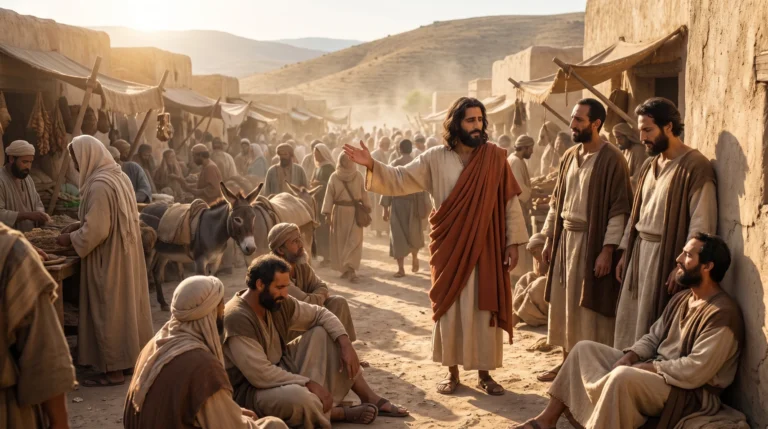
I keep coming back to verse 8. Paul says he was "pressed out of measure, above strength," so far gone that he "despaired even of life." That's not a man having a rough week. That's a man who thought he was done.
And that's exactly where this chapter starts to matter.
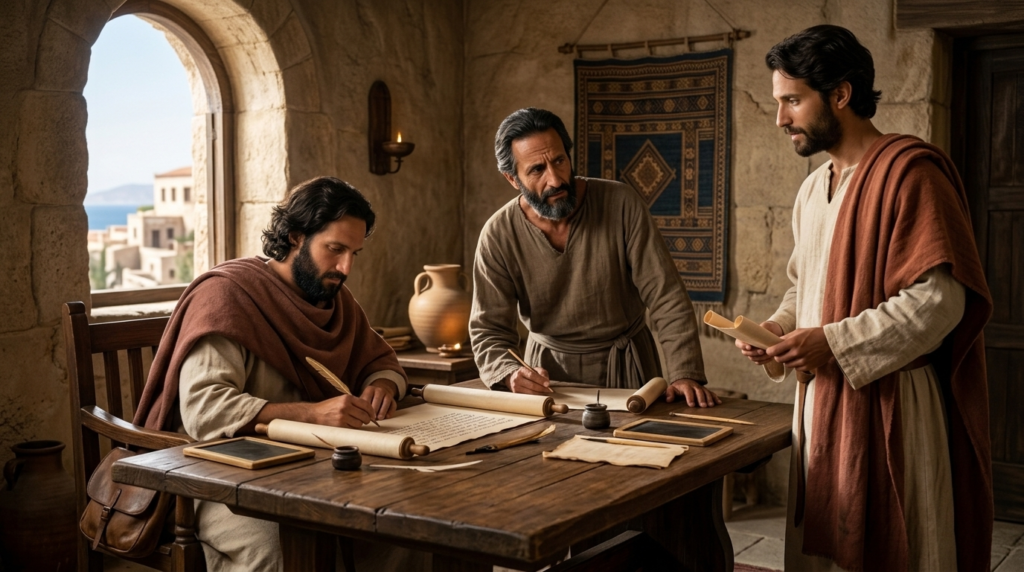
2 Corinthians 1 isn't a tidy devotional about God being nice to us when things get hard. It's Paul, mid-crisis, writing to a church he loves, trying to explain why the worst season of his ministry turned into the clearest picture he ever got of who God is. Read the whole chapter first if you haven't lately — then let's walk through it together.
The God of All Comfort (verses 3-4)
"Blessed be God, even the Father of our Lord Jesus Christ, the Father of mercies, and the God of all comfort; who comforteth us in all our tribulation, that we may be able to comfort them which are in any trouble, by the comfort wherewith we ourselves are comforted of God."
God isn't just described as comforting here — He's called "the God of all comfort," full stop. That's His nature, not a mood He's in on your good days.
Ellen White ties this straight to Christ's own life: "It was through suffering that Jesus obtained the ministry of consolation. In all the affliction of humanity He is afflicted" (MB 13.1). He didn't learn comfort from a distance. He walked through it first.
Ellet Waggoner put it plainly too: "His comfort is inexhaustible... We are to accept God's comfort, and pass it along. God thus makes us sharers in His own work. The Holy Spirit takes us into co-partnership, as it were. He makes us comforters" (PTUK 534.3).
That's the hinge of the whole chapter. Comfort was never meant to end with you. It's meant to move through you to somebody else who's drowning right now.
The Fellowship of Suffering (verses 5-7)
"For as the sufferings of Christ abound in us, so our consolation also aboundeth by Christ."
There's a proportion here worth sitting with. The consolation doesn't trickle in slower than the suffering — it matches it, step for step. Waggoner noticed the same thing: "he who is upheld and a slight trial, need not fear a great one; for if he be faithful, his consolation shall abound as his sufferings abound" (SITI 557.5). Bigger trial, bigger grace. Not less.
And there's a purpose behind it that Ellen White names directly: suffering is "one means of perfecting character," a way our eyes get pulled off the ground and toward Heaven (WM 20.1). Nobody enjoys hearing that mid-crisis. I don't. But looking back at my own hardest years, I can't argue with it either.
Trusting God in Extremity (verses 8-10)
This is where Paul gets specific about Asia — whatever happened there, it broke him down to nothing. "We had the sentence of death in ourselves," he writes, "that we should not trust in ourselves, but in God which raiseth the dead."
Read that again. The purpose of the crisis wasn't punishment. It was to strip away his self-reliance until God was the only thing left to hold onto.
I think that's the part we resist hardest. We'd rather learn dependence gently. Paul didn't get that option, and honestly, most of us don't either — the lesson usually shows up after the safety net is already gone, not before.
The Power of Prayer and a Clear Conscience (verses 11-14)
Paul brings the Corinthians into this too — their prayers were part of how he made it through. "You also helping together by prayer for us, that for the gift bestowed upon us by the means of many persons thanks may be given by many on our behalf."
Then he says something almost defensive: his rejoicing is the testimony of his own conscience, that he dealt with them "in simplicity and godly sincerity." No games. No hidden agenda. Just plain honesty, even when it cost him.
The Certainty of God's Promises (verses 18-22)
"For all the promises of God in him are yea, and in him Amen, unto the glory of God by us."
This is the verse I'd want tattooed somewhere if I did that sort of thing. Paul had just been accused of flip-flopping on his travel plans, and instead of getting defensive about his schedule, he points to Christ — who never wavers. Every promise God has made lands on "yes." Not "maybe." Not "we'll see." Yes, and Amen.
And He backs that yes with something tangible: He's sealed us and "given the earnest of the Spirit in our hearts" — a down payment, a taste now of what's coming in full later.
What This Means for You Today
Paul wasn't writing a Bible study. He was writing to explain why he'd nearly died and come out the other side more certain of God than before. That's the whole chapter in one sentence.
If you're in a season that feels like Asia — pressed past what you thought you could carry — this isn't a detour from your faith. It might be the exact place where it gets real. And whatever comfort you're finding on the other side of it isn't just for you to keep. Somebody near you is going to need the very thing God is teaching you to hold onto right now.
All Scripture quotations are from the King James Version. Quotes from Ellen G. White and other Adventist pioneer writers are drawn from public domain sources, cited above.