
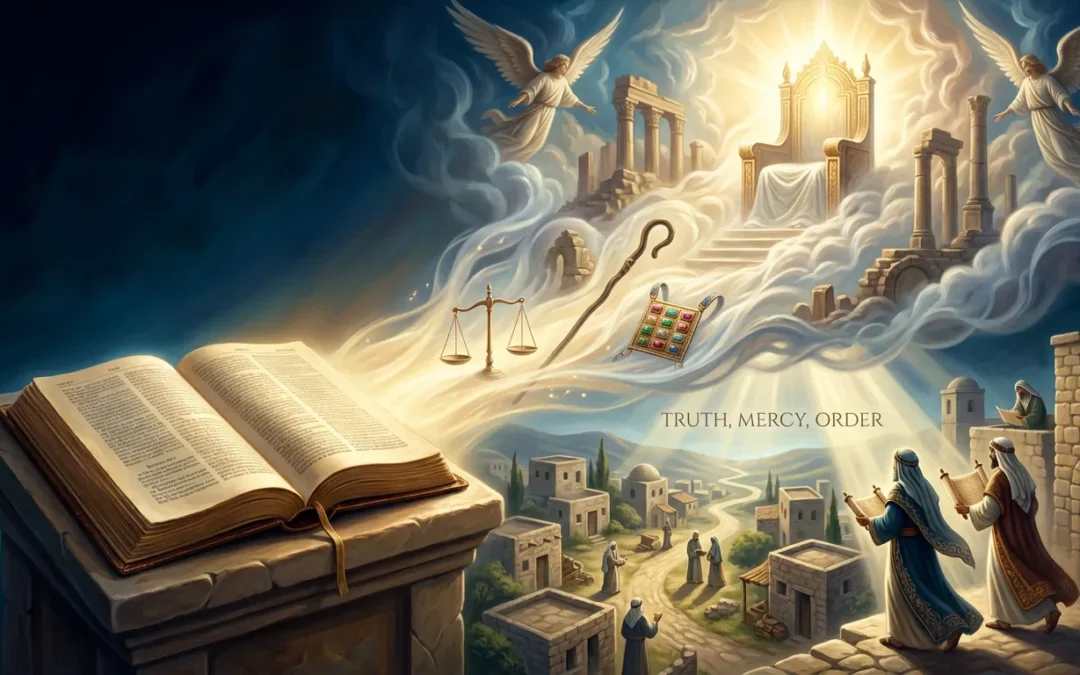
Why God’s Judgments Are Not to Be Feared, but Trusted
“He is the Rock, his work is perfect: for all his ways are judgment: a God of truth and without iniquity, just and right is he.”
— Deuteronomy 32:4, KJV
The word judgment often stirs unease. In modern usage, it carries connotations of condemnation, punishment, or harsh verdicts. Yet Scripture presents judgment in a far richer and more hopeful light. From Genesis to Revelation, God’s judgments are consistently portrayed as expressions of His truth, justice, mercy, and faithfulness.
When we allow the Bible to define judgment on its own terms, we discover that God’s judgments are not arbitrary or cruel—they are the very foundation of a moral universe governed by love.
Judgment Begins With Relationship
The first time judgment appears prominently in Scripture, it is rooted in covenant faithfulness, not condemnation.
God said of Abraham:
“For I know him, that he will command his children and his household after him, and they shall keep the way of the LORD, to do justice and judgment”
— Genesis 18:19
Judgment here is inseparable from teaching, discipleship, and obedience. God entrusts Abraham with judgment because Abraham walks with Him. Biblical judgment flows from knowing God, not merely knowing rules.
This principle remains unchanged: those who walk closely with God learn to reflect His justice in their homes, communities, and decisions.
Judgment as Protection Against Evil
In Exodus, judgment is revealed as God’s decisive stand against oppression and false worship:
“Against all the gods of Egypt I will execute judgment: I am the LORD.”
— Exodus 12:12
God’s judgment was not random destruction—it was deliverance. The plagues exposed false gods, broke the power of tyranny, and liberated an enslaved people. Judgment here becomes an act of rescue.
This same pattern repeats throughout Scripture: judgment confronts what destroys life so that life may flourish.
Judgment Must Be Just and Compassionate
God repeatedly warns Israel not to corrupt judgment:
“Thou shalt not wrest the judgment of thy poor in his cause.”
— Exodus 23:6
True judgment defends the vulnerable. Scripture consistently links justice with care for the poor, the widow, and the stranger. When judgment becomes self-serving or oppressive, it no longer reflects God’s character.
That is why prophets like Jeremiah and Micah thundered against leaders who “perverted all equity” while claiming to serve God. Judgment without compassion is counterfeit righteousness.
Judgment Carried on the Heart
One of the most beautiful images of judgment appears in the priestly ministry:
“Aaron shall bear the judgment of the children of Israel upon his heart before the LORD continually.”
— Exodus 28:30
Judgment was not merely spoken—it was carried on the heart. The high priest stood before God representing the people, reminding us that divine judgment is relational, intercessory, and redemptive.
This imagery ultimately points forward to Christ, our true High Priest, who bears our case before the Father—not to condemn, but to save.
Judgment Reveals God’s Character
The Psalms declare:
“Righteousness and judgment are the habitation of his throne.”
— Psalm 97:2
God’s throne is not built on power alone, but on moral integrity. Judgment reveals who God is. He does not change standards based on convenience or favoritism. His judgments are consistent, righteous, and trustworthy.
This is why Scripture can say:
“The LORD loveth judgment, and forsaketh not his saints.”
— Psalm 37:28
For the faithful, judgment is not a threat—it is a promise that evil will not prevail forever.
Judgment and the Coming of Christ
In the New Testament, judgment reaches its fullest meaning in Jesus Christ.
Jesus declared:
“For judgment I am come into this world, that they which see not might see.”
— John 9:39
Christ’s presence exposes hearts. Judgment is no longer only about courts and laws—it is about truth revealed. Light reveals what darkness hides.
The apostles remind us:
“We must all appear before the judgment seat of Christ.”
— 2 Corinthians 5:10
Yet this same Christ is our Advocate, our Redeemer, and our righteousness.
Judgment as Hope, Not Fear
Revelation closes with this announcement:
“Fear God, and give glory to him; for the hour of his judgment is come.”
— Revelation 14:7
This is not a call to terror—it is a call to worship. Judgment means God is finally setting things right. Lies will end. Injustice will be exposed. Truth will stand.
For those who trust Him, judgment is the assurance that God has not abandoned the world.
A Final Reflection
Judgment in Scripture is not about a harsh God eager to condemn. It is about a faithful God committed to truth, justice, and restoration. It calls us to live thoughtfully, love deeply, and walk humbly before Him.
We seeks to remind seekers everywhere: God’s Word does not merely inform us—it transforms us.
If His judgments are righteous, then we can trust Him fully—today, and in the day when all things are made new.