The Gospel Hidden in the Sanctuary
Key Scripture
“Search the scriptures; for in them ye think ye have eternal life: and they are they which testify of me.” — John 5:39 (KJV)
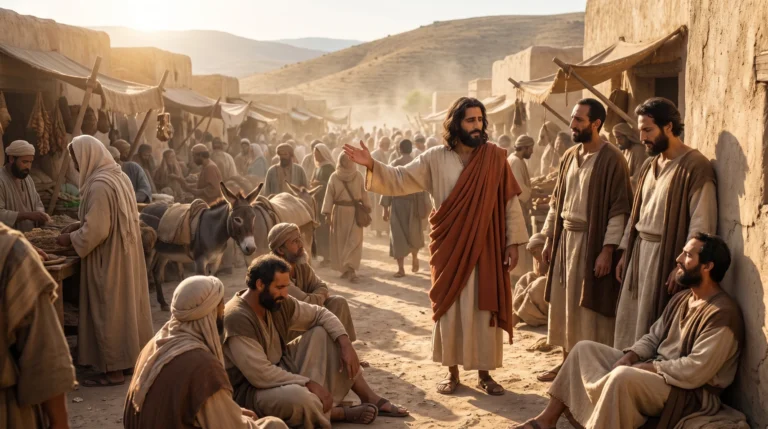
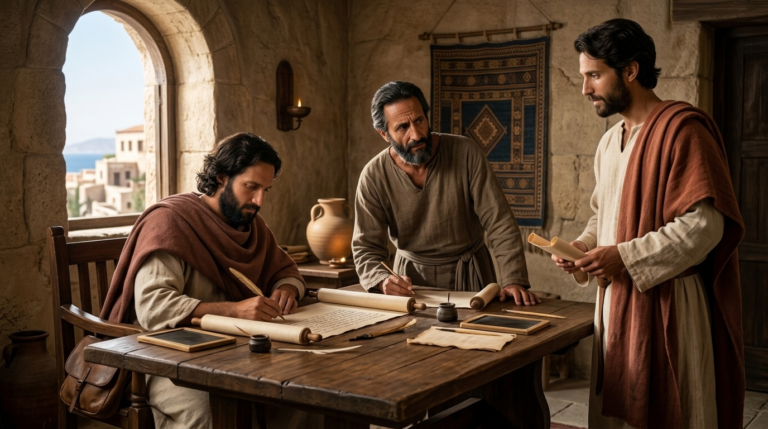
When Jesus spoke these words, the New Testament had not yet been written. Christ was pointing His listeners back to the Old Testament Scriptures—the books of Moses, the sanctuary services, the sacrifices, and the prophetic symbols that all testified of Him.
Among these books, Leviticus stands as one of the clearest revelations of the gospel in symbol and shadow.
At first glance, Leviticus may appear to be merely a collection of ceremonial laws, priestly duties, sacrifices, and regulations concerning holiness. But beneath every offering, every drop of blood, every feast day, and every act of cleansing is the story of Jesus Christ.
Leviticus reveals:
The holiness of God
The seriousness of sin
Humanity’s need for atonement
The ministry of a mediator
The promise of cleansing
The restoration God desires for His people
It is the gospel preached through symbols before Christ came in the flesh.
Why Leviticus Matters
Leviticus was given after the tabernacle had been established in the wilderness. God desired to dwell among His people, but sin separated humanity from His holy presence.
The sanctuary became a living illustration of salvation.
Every sacrifice pointed to Jesus.
Every priest represented Christ’s ministry.
Every feast illustrated God’s redemptive timeline.
Every cleansing ceremony testified that God desired to restore sinners completely.
The earthly sanctuary was a “shadow of good things to come.”
The sacrifices themselves could not save anyone. They pointed forward to the true Lamb of God who would one day bear the sins of the world.
The Central Theme of Leviticus
The great message of Leviticus can be summarized in one truth:
God provides a way for sinful humanity to dwell in His presence through Jesus Christ.
Sin brings separation.
Blood brings atonement.
Holiness brings restoration.
Christ fulfills it all.
Chapter Breakdown: Seeing Jesus in Leviticus
Leviticus 1 — The Burnt Offering
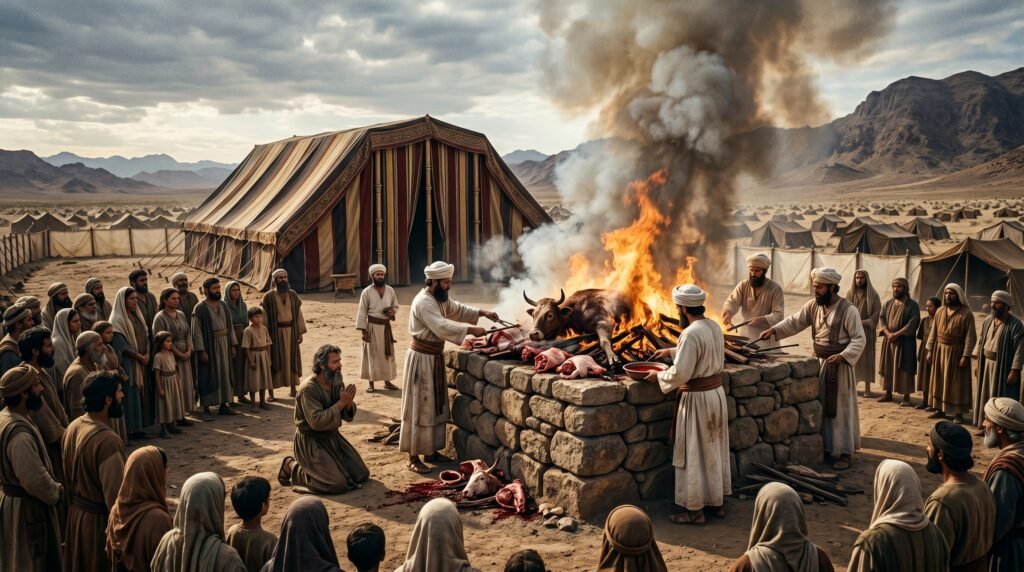
The burnt offering was completely consumed upon the altar. Nothing was held back.
This offering symbolizes total surrender and complete consecration to God.
Jesus fulfilled this perfectly. Christ gave Himself entirely for humanity. His sacrifice was absolute and voluntary.
The offering had to be “without blemish,” pointing to the sinless perfection of Christ.
Jesus Revealed:
The perfect sacrifice
Total surrender to the Father
Complete obedience
Leviticus 2 — The Meat Offering
The meat (grain) offering contained:
Fine flour
Oil
Frankincense
No leaven
The fine flour represents the balanced perfection of Christ’s character.
The oil symbolizes the Holy Spirit.
The frankincense represents the fragrance of His righteousness.
The absence of leaven points to the absence of sin.
Jesus is the Bread of Life.
Jesus Revealed:
The sinless character of Christ
Spiritual nourishment
The perfect life offered to God
Leviticus 3 — The Peace Offering
The peace offering symbolized fellowship and reconciliation with God.
Because of Christ’s sacrifice, peace between heaven and humanity becomes possible.
Jesus is our peace.
Jesus Revealed:
Reconciliation
Fellowship with God
Communion restored
Leviticus 4–5 — The Sin Offering & Trespass Offering
These offerings dealt directly with guilt and sin.
The sinner placed hands upon the sacrifice, symbolically transferring guilt to the innocent victim.
This powerfully points to Christ taking humanity’s sins upon Himself.
“He hath made him to be sin for us, who knew no sin.” — 2 Corinthians 5:21
Jesus Revealed:
The Sin Bearer
The substitute sacrifice
The One who carries guilt away
Leviticus 6–7 — Laws of the Offerings
These chapters reveal the continual nature of sacrifice and priestly ministry.
The fire on the altar was never to go out.
This points to:
God’s continual mercy
Christ’s continual intercession
The ongoing availability of grace
Jesus Revealed:
Our continual mediator
Ever-living intercessor
The eternal source of atonement
Leviticus 8–10 — The Priesthood
Aaron and his sons were consecrated for ministry.
Their washing, anointing, garments, and sacrifices all point to Christ as our High Priest.
But then comes the story of Nadab and Abihu offering “strange fire.”
God rejected worship mixed with human invention and irreverence.
Jesus Revealed:
The true High Priest
Holy mediation
Reverence in worship
Leviticus 11 — Clean and Unclean
The distinction between clean and unclean animals was not arbitrary.
God was teaching His people holiness, discernment, and separation from corruption.
The principles extended beyond diet into spiritual life.
Jesus Revealed:
The call to holiness
Purity in body and soul
Restoration of God’s image in humanity
Leviticus 12–15 — Cleansing and Restoration
These chapters focus heavily on uncleanness, disease, and purification.
Leprosy especially becomes a symbol of sin:
spreading
defiling
separating
corrupting
But God also provided cleansing.
Jesus later fulfilled this beautifully when He touched lepers and made them whole.
Jesus Revealed:
The Great Physician
Cleansing from sin
Restoration to fellowship
Leviticus 16 — The Day of Atonement
This is the heart of Leviticus.
Once each year, the high priest entered the Most Holy Place to cleanse the sanctuary.
This solemn service pointed forward to Christ’s heavenly ministry and final work of atonement.
Two goats were used:
One slain for the Lord
One sent into the wilderness
The sanctuary was cleansed from accumulated sins.
Jesus Revealed:
Our High Priest
Final atonement
Cleansing from sin
Complete restoration
This chapter reveals that salvation is not only forgiveness—it is ultimately the removal of sin itself.
Leviticus 17 — The Blood
“The life of the flesh is in the blood.”
Without blood, there is no remission of sin.
This chapter points directly to Calvary.
Every sacrifice in Leviticus cries out:
Sin costs life.
Jesus shed His blood so humanity could live.
Jesus Revealed:
The life-giving sacrifice
Redemption through blood
The Lamb slain for the world
Leviticus 18–22 — Practical Holiness
God instructed Israel regarding:
morality
justice
sexuality
honesty
compassion
worship
daily conduct
Holiness was not merely ceremonial. It affected every area of life.
God desired a people who reflected His character.
Jesus Revealed:
Righteous living
Love fulfilled in action
Holiness in daily life
Leviticus 23 — The Feasts of the Lord
This chapter outlines God’s prophetic calendar.
Passover
Points to Christ’s death.
Unleavened Bread
Represents separation from sin.
Firstfruits
Points to Christ’s resurrection.
Pentecost
Points to the outpouring of the Holy Spirit.
Trumpets
A call to repentance and preparation.
Day of Atonement
The final cleansing work.
Tabernacles
The future gathering and eternal kingdom.
Jesus Revealed:
The Lamb
The risen Savior
The outpoured Spirit
The coming King
Leviticus 24 — Light and Bread
The lampstand burned continually.
The showbread remained continually before God.
Jesus declared:
“I am the light of the world.”
“I am the bread of life.”
Jesus Revealed:
Spiritual light
Continual sustenance
God’s presence with His people
Leviticus 25 — Sabbath Years & Jubilee
The Year of Jubilee proclaimed:
liberty
restoration
freedom from debt
return of inheritance
This is one of the clearest pictures of redemption in Scripture.
Jesus came to proclaim liberty to the captives.
Everything lost through sin will ultimately be restored.
Jesus Revealed:
The Redeemer
Restorer of inheritance
Deliverer of captives
Leviticus 26 — Blessings and Curses
This chapter reveals the results of obedience and rebellion.
God desired to dwell among His people:
“I will walk among you, and will be your God.”
Even after judgment, mercy still appears.
God remembers His covenant.
Jesus Revealed:
Covenant faithfulness
Mercy amid judgment
God dwelling with humanity
Leviticus 27 — Consecration
The book closes with vows, dedication, and holy things belonging to God.
The final message of Leviticus is surrender.
Everything belongs to the Lord.
Jesus Revealed:
Total consecration
Ownership by redemption
A life fully devoted to God
The Mighty Lamb in Leviticus
Leviticus may seem filled with blood, altars, priests, and rituals—but all of it points to one Person:
Jesus Christ.
He is:
The spotless Lamb
The true Priest
The perfect sacrifice
The cleansing blood
The Bread of Life
The Light of the World
The Great Physician
The Mediator
The Redeemer
The coming King
The sanctuary message teaches that salvation is not human effort climbing upward to God.
It is God reaching downward to save humanity through Christ.
Final Reflection
Leviticus reveals that God has always desired restoration—not destruction.
Every sacrifice whispered:
“A Savior is coming.”
Every priestly ministry declared:
“There is a Mediator.”
Every cleansing ceremony promised:
“Sin will not reign forever.”
Every feast proclaimed:
“God’s plan of redemption is unfolding.”
And at the center of it all stands the Mighty Lamb.
The book of Leviticus is not outdated religion.
It is the gospel in shadow form.
It is Calvary illustrated before the cross ever came.
It is Jesus revealed through sacrifice, priesthood, blood, cleansing, and covenant love.